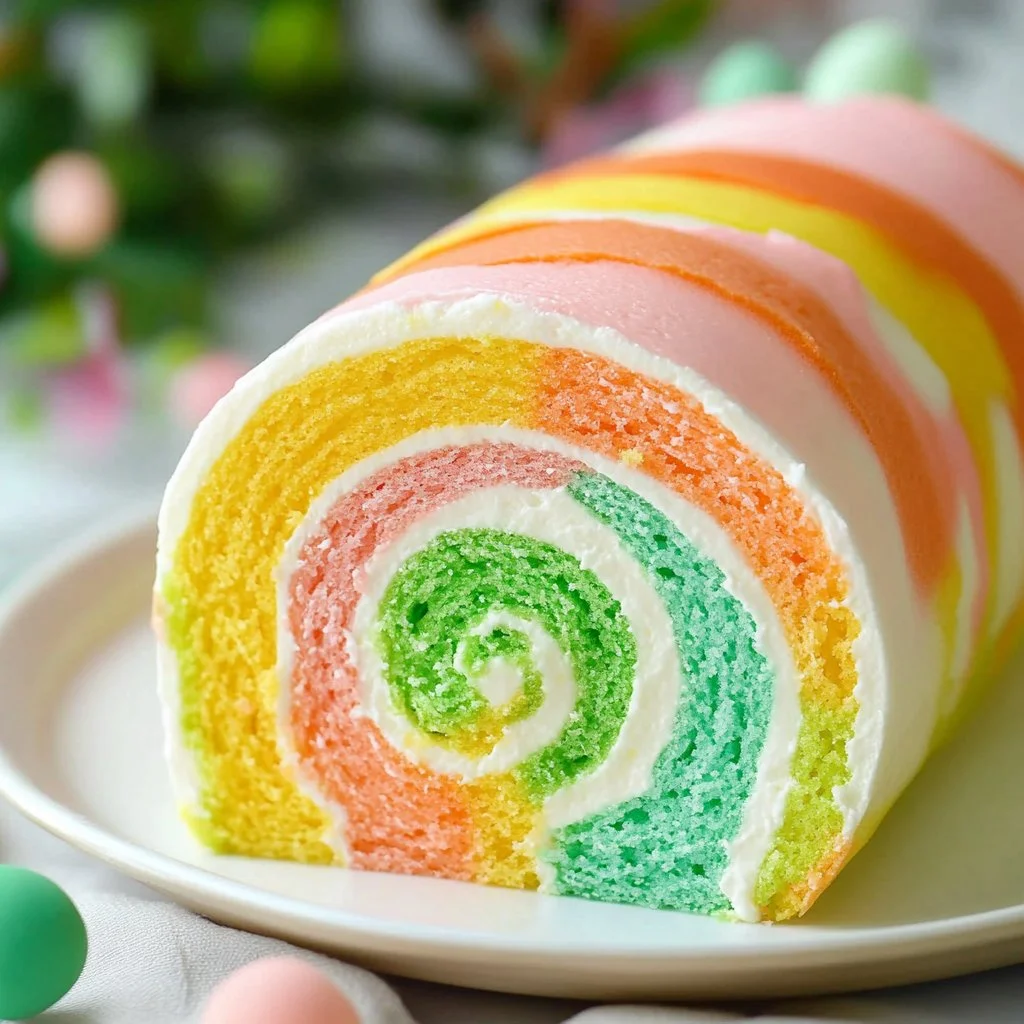
Easter Cake Roll is a delightful treat that captures the essence of spring with its vibrant colors and light, fluffy texture. This eye-catching dessert is not just visually appealing but also brings a wave of nostalgia and joy to gatherings with family and friends. Ideal for the Easter celebration, this cake roll is easy to make and offers a fun, interactive experience for bakers of all ages. With a step-by-step approach, you’ll find that creating this colorful cake isn’t just rewarding but also a wonderful way to share love and sweetness during the festive season.
Ingredients
To prepare your Easter Cake Roll, gather the following ingredients that will make your dessert incredibly tasty:
- 1 box of vanilla cake mix: This ready-to-bake mix makes the base of your cake light and fluffy.
- 5 eggs: These will add richness and stability to your cake while enhancing its flavor.
- ½ cup of water: This helps to hydrate and bind the ingredients for a perfect batter.
- ¼ cup of oil: Using oil instead of butter gives the cake a moist and tender texture.
- Green, yellow, blue, and pink gel food colors: These vibrant colors will transform your cake into a festive masterpiece.
- Powdered sugar for dusting: This delicate sugar adds sweetness and a charming finish to your cake.
- ½ cup unsalted butter, softened: A key ingredient for a creamy and decadent buttercream filling.
- 1½ teaspoons vanilla extract: This aromatic extract adds a warm sweetness that perfectly complements the cake.
- 3 cups of powdered sugar: Essential for your buttercream, giving it a nice, smooth frosting texture.
- 3 to 4 tablespoons of milk: This will create a luscious consistency for your buttercream.
Cooking Time & Tips For Easter Cake Roll
The culinary process for the Easter Cake Roll is engaging and straightforward, making it a perfect choice for those who enjoy baking. Quick preparation usually means you can whip up this dessert in 30 minutes, plus additional time for cooling and chilling. However, a slower pace allows you to perfect each step, ensuring a flawless final presentation.
To succeed with your cake roll, here are some practical tips:
- Ensure all ingredients are at room temperature for better mixing.
- Don’t rush the cooling time; rolling the cake too early could lead to cracks.
- Use a kitchen towel dusted with powdered sugar to prevent sticking while rolling.
Step-by-Step Directions
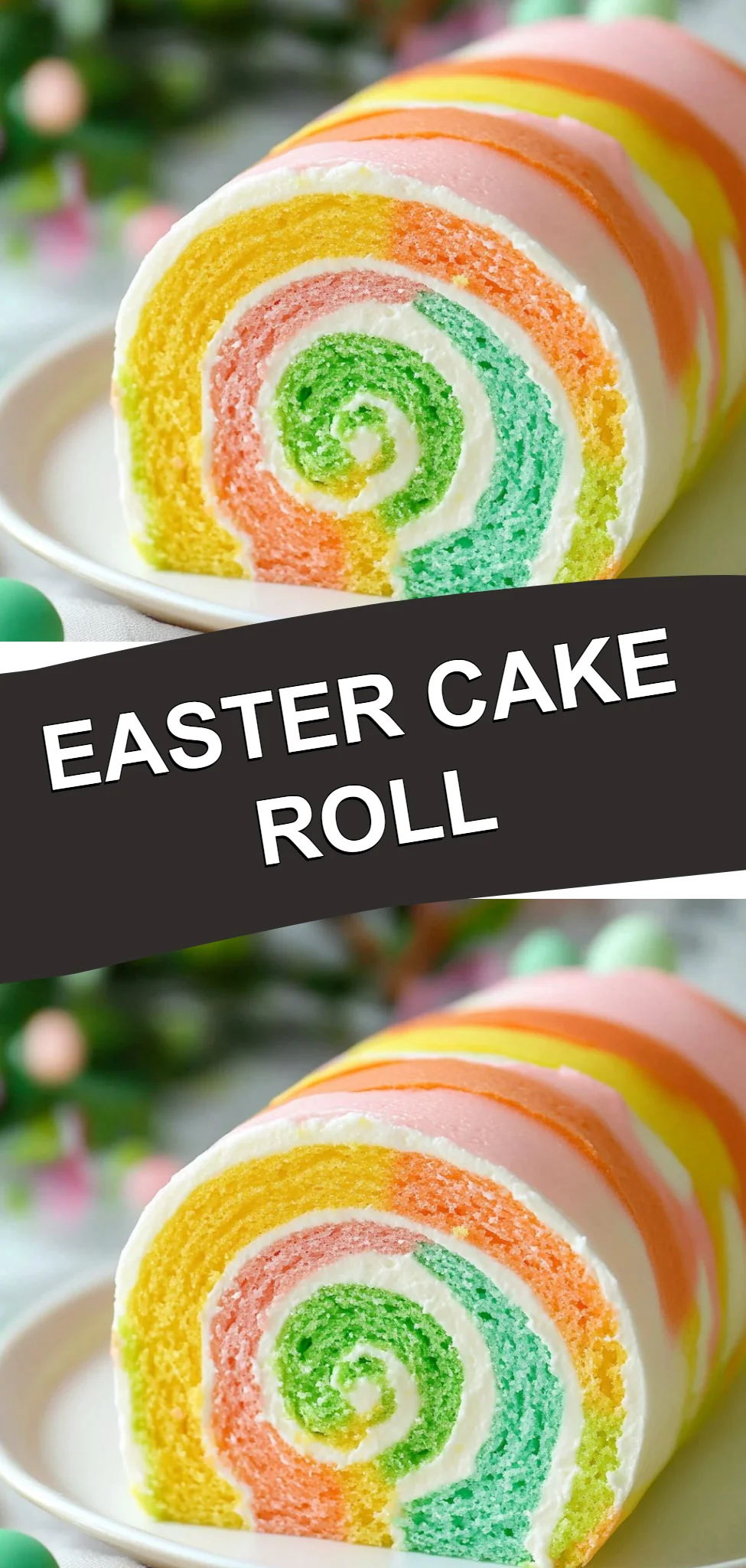
Let’s dive into the step-by-step process of creating this beautiful Easter Cake Roll:
-
Preheat your oven to 325 degrees Fahrenheit. Start by greasing a 12×17 inch jelly roll pan, lining the bottom with parchment paper, and greasing the paper as well. This foundational step ensures your cake releases easily.
-
Beat the eggs in a large mixing bowl for about 2 minutes until they appear pale yellow and frothy. This process incorporates air into the eggs, creating a light and fluffy cake.
-
Add the cake mix, water, and oil to the beaten eggs. Mix well until everything is fully combined and smooth, creating a gorgeous, rich batter.
-
Divide the batter evenly into four bowls. Add a few drops of green, yellow, blue, and pink gel food colors to each bowl, then stir gently until the colors are bright and vibrant.
-
Fill piping bags with each colored batter. Cut a small corner from each bag to pipe the batter onto the pan. Pipe diagonal stripes across the pan, alternating colors. Make sure to keep the stripes thin to avoid running out of any particular color.
-
Swirl the colors gently using a toothpick, creating beautiful, swirling patterns. Be careful not to mix the colors too much; you want them to remain distinct.
-
Tap the pan on the countertop to release any air bubbles. Bake in the preheated oven for 15 to 20 minutes, watching closely until the cake springs back when gently pressed. Overbaking can lead to cracks in the final rolled cake.
-
Prepare a clean kitchen towel on the counter and dust it generously with powdered sugar. Once the cake is done, run a knife around the edges, then flip it onto the towel. Carefully peel away the parchment paper, and dust the top with more powdered sugar.
-
Roll the cake up tightly starting from one short end, with the towel inside to help form the shape. Allow the cake to cool completely rolled up for about two hours.
-
Afterwards, beat the softened butter and vanilla extract until fluffy in a mixing bowl. Gradually add in the powdered sugar, mixing well, then add milk one tablespoon at a time until you achieve a smooth, spreadable consistency.
-
Unroll the cooled cake carefully; it may crack slightly, but don’t worry! Spread the buttercream filling evenly over the cake using an offset spatula.
-
Roll the cake back up tightly without the towel inside, taking care to keep the filling intact. Transfer the cake roll to a serving plate.
-
Dust off any excess powdered sugar with a dry brush and cover the cake. Chill in the fridge for at least 3 to 4 hours before serving to let all the flavors meld together beautifully. Store any leftovers covered in the fridge.
Serving Suggestions & Occasions
Easter Cake Roll is perfect for festive gatherings, particularly during Easter celebrations. It makes a stunning centerpiece on dessert tables, bringing cheerful colors and flavors that are sure to impress both kids and adults alike. Pair it with a scoop of vanilla ice cream for an extra special treat, or serve it alongside fresh berries for a refreshing contrast. It’s also ideal for birthday parties, picnics, and spring celebrations, making every occasion just a bit sweeter!
Common Mistakes For Easter Cake Roll
Creating the perfect Easter Cake Roll can be a delight, but several common pitfalls may occur:
- Overbaking the cake can result in cracks when rolling. Always keep an eye on the baking time.
- Not cooling the cake sufficiently before rolling can lead to a mishap, as a hot cake is more prone to breaking.
- Using too much food coloring can cause flavors to alter. Stick to just a few drops for vibrant colors without altering the taste.
Healthier Alternatives & Variations
For those looking to make healthier choices or spice things up, here are a few alternatives and variations you might consider:
- Substitute whole wheat flour in place of the vanilla cake mix for a healthier option, but adjust the baking time accordingly.
- Use natural fruit purees, like strawberry or mango, for color and sweetness, reducing the need for gel food coloring.
- For a unique twist, fill the cake with citrus-flavored cream cheese frosting instead of the classic buttercream for a zesty fresh taste.
FAQs
-
Can I make the cake roll ahead of time?
Yes, the cake can be made a day in advance. Just make sure to keep it covered in the refrigerator. -
What kind of food coloring is best?
Gel food colors provide vibrant colors without changing the texture of the batter. -
How do I fix cracks in the cake?
If cracks occur, don’t fret! The frosting will cover most imperfections. -
Can I freeze the Easter Cake Roll?
Yes, you can freeze it! Just ensure it’s wrapped tightly and well covered to prevent freezer burn. -
Is there a dairy-free option for the buttercream?
Absolutely! Use dairy-free margarine or coconut cream for a delicious buttercream alternative. -
What type of pan do I need?
A jelly roll pan (12×17 inch) is recommended for the best results, but a similar-sized baking sheet will work as well.
Conclusion
Easter Cake Roll is not just a dessert; it’s an experience filled with colors, flavors, and memories waiting to be made. Its easy-to-follow steps ensure that bakers of all skill levels can create this delightful treat to share with family and friends. With its soft, tender cake and creamy filling, every slice promises a delicious burst of joy that is sure to brighten up your Easter table. So why wait? Gather your ingredients and get rolling—your festive celebration deserves this charming cake roll!
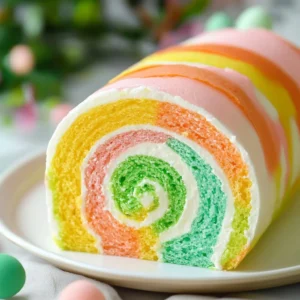
Easter Cake Roll
Ingredients
Cake Ingredients
- 1 box vanilla cake mix This ready-to-bake mix makes the base light and fluffy.
- 5 pieces eggs Adds richness and stability.
- ½ cup water Helps bind the ingredients.
- ¼ cup oil Using oil instead of butter gives a moist texture.
- Green, yellow, blue, and pink gel food colors These will make the cake colorful.
- powdered sugar for dusting Adds sweetness and finish.
Buttercream Filling
- ½ cup unsalted butter, softened Key for a creamy filling.
- 1½ teaspoons vanilla extract Adds a warm sweetness.
- 3 cups powdered sugar Essential for smooth frosting.
- 3 to 4 tablespoons milk For desired consistency.
Instructions
Preparation
- Preheat your oven to 325°F. Grease a 12x17 inch jelly roll pan, line with parchment paper, and grease the paper.
- Beat the eggs in a large mixing bowl for about 2 minutes until pale and frothy.
- Add the cake mix, water, and oil to the beaten eggs. Mix until smooth.
- Divide the batter into four bowls. Add gel food colors to each and stir until vibrant.
- Pipe alternating colored batter onto the pan in diagonal stripes; keep stripes thin.
- Swirl colors gently with a toothpick, avoiding too much mixing.
- Tap the pan to release air bubbles. Bake for 15 to 20 minutes until the cake springs back when pressed.
- Dust a clean kitchen towel with powdered sugar. Once baked, run a knife around edges and flip the cake onto the towel, peeling away the parchment and dusting the top with more powdered sugar.
- Roll the cake tightly with the towel inside and let it cool for about two hours.
Making the Filling
- Beat softened butter and vanilla until fluffy. Gradually add powdered sugar, mixing well. Add milk one tablespoon at a time to achieve smooth consistency.
Assembly
- Unroll the cooled cake carefully. Spread the buttercream filling evenly and roll the cake back up tightly.
- Transfer to a serving plate and dust off excess powdered sugar with a dry brush. Chill in the fridge for 3 to 4 hours before serving.